Portfolio Management
Learn to build, manage, and optimize a diversified investment portfolio.
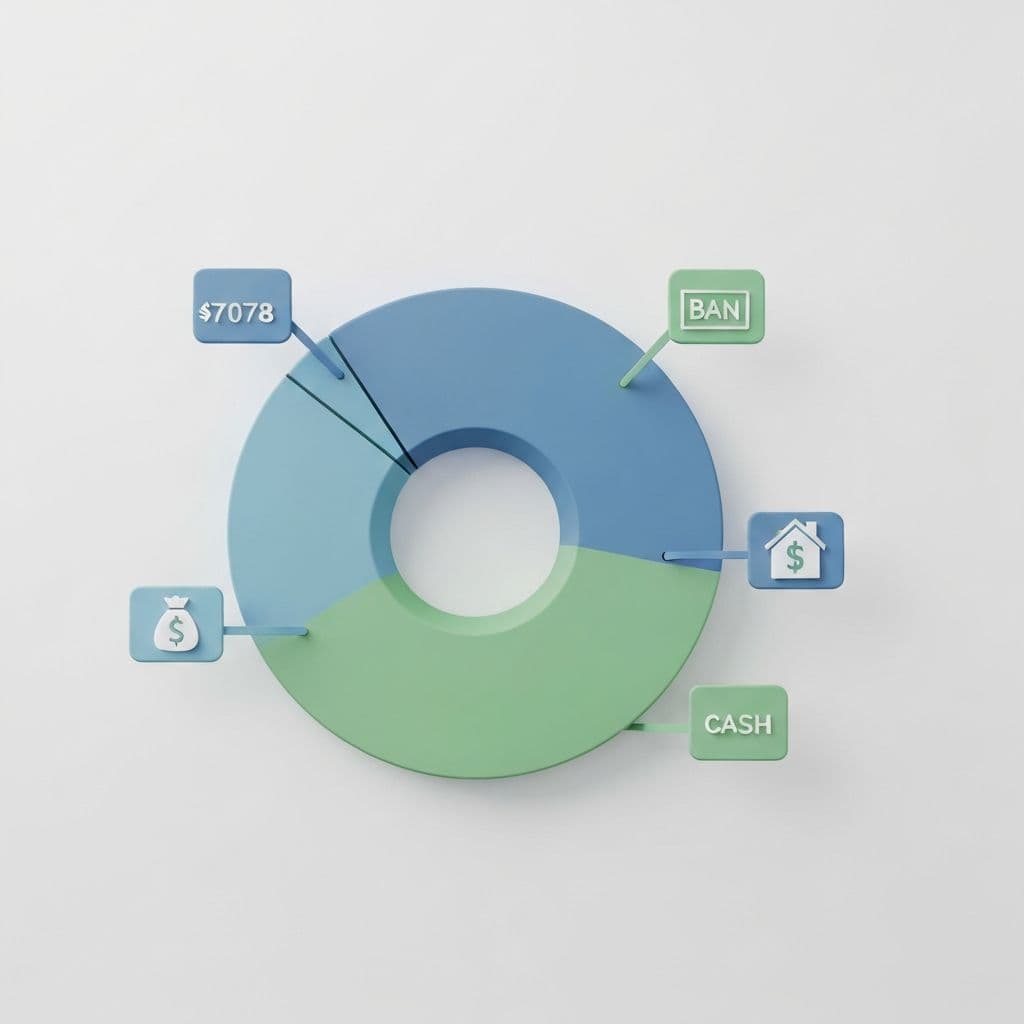
Build a Portfolio That Lasts
A well-constructed portfolio is the foundation of successful investing. Learn the principles of asset allocation, diversification, position sizing, and performance measurement to build wealth that compounds steadily over decades.
What Is Portfolio Management?
Portfolio management is the art and science of selecting and overseeing a group of investments that meet the long-term financial objectives of an investor. It involves balancing risk and return through careful asset selection, allocation, and ongoing monitoring. The goal is not to maximize returns at any cost, but to optimize returns for a given level of risk.
Key Takeaways
- Aligns investments with your financial goals and time horizon
- Balances risk and return through diversification
- Requires ongoing monitoring and periodic adjustments
- Both an art (judgment, conviction) and a science (data, models)
Asset Allocation
Asset allocation is the process of dividing your portfolio among different asset categories such as stocks, bonds, real estate, and cash. Research consistently shows that asset allocation is the single most important factor in portfolio performance, accounting for over 90% of return variation across portfolios.
| Model | Stocks | Bonds | Other | Risk | Time Horizon |
|---|---|---|---|---|---|
| Aggressive | 90% | 5% | 5% | High | 20+ years |
| Growth | 70% | 20% | 10% | Med-High | 10-20 years |
| Balanced | 50% | 35% | 15% | Moderate | 5-10 years |
| Conservative | 30% | 50% | 20% | Low-Med | 3-5 years |
| Preservation | 10% | 60% | 30% | Low | 0-3 years |
Key Takeaways
- Stocks: Higher return potential, higher volatility (equities, ETFs)
- Bonds: Steady income, lower risk (government, corporate bonds)
- Real Estate: Inflation hedge, income generation (REITs, property)
- Cash & Equivalents: Safety, liquidity (money market, short-term T-bills)
Diversification Strategies
Diversification is the practice of spreading investments across different securities, sectors, and geographies to reduce risk. The idea is that when one investment falls, others may hold steady or rise, smoothing your overall returns. However, over-diversification (diworsification) can dilute returns without meaningful risk reduction.
Key Takeaways
- Across sectors: Technology, healthcare, financials, consumer staples, energy
- Across geographies: Domestic, international developed, emerging markets
- Across market caps: Large-cap stability, mid-cap growth, small-cap opportunity
- Across asset classes: Stocks, bonds, real estate, commodities
- Optimal: 15-25 stocks across 5-7 sectors provides ~95% of diversification benefit
Position Sizing
Position sizing determines how much capital to allocate to each individual investment. Proper position sizing is critical for managing risk -- even a great stock pick can damage your portfolio if you bet too much on it. Conversely, allocating too little to your best ideas limits their impact on returns.
High Conviction
5-10%
3-5 stocks
Standard
2-5%
8-12 stocks
Speculative
1-2%
3-5 stocks
Key Takeaways
- Core positions: 5-10% of portfolio for highest conviction ideas
- Standard positions: 2-5% for solid companies with good fundamentals
- Small positions: 1-2% for speculative or early-stage investments
- Never let a single stock exceed 15-20% of total portfolio
- Scale into positions gradually rather than buying all at once
Rebalancing Your Portfolio
Rebalancing is the process of realigning the weightings of your portfolio to maintain your target asset allocation. As market prices change, some assets grow faster than others, causing your portfolio to drift from its original allocation. Regular rebalancing enforces a disciplined buy-low, sell-high approach.
Key Takeaways
- Calendar-based: Rebalance quarterly, semi-annually, or annually
- Threshold-based: Rebalance when allocation drifts > 5% from target
- Naturally sells winners and buys laggards (contrarian discipline)
- Consider tax implications: use tax-advantaged accounts for rebalancing
- Avoid over-rebalancing which increases transaction costs
Measuring Portfolio Performance
Tracking and measuring your portfolio's performance is essential for knowing whether your strategy is working. Simple return calculations are not enough -- you need to account for risk, benchmark comparisons, and the impact of contributions and withdrawals.
Total Return
(End Value - Start Value + Income) / Start Value
Overall gain or loss
CAGR
(End/Start)^(1/Years) - 1
Annualized compound growth
Sharpe Ratio
(Rp - Rf) / Std Dev
Return per unit of risk
Max Drawdown
(Trough - Peak) / Peak
Worst peak-to-trough decline
Key Takeaways
- Total Return: Capital gains + dividends + interest received
- Time-Weighted Return: Removes the effect of cash flows (industry standard)
- Risk-Adjusted Return (Sharpe Ratio): Return per unit of risk taken
- Benchmark Comparison: Measure against relevant index (S&P 500, etc.)
- Track over full market cycles (5-10 years), not just single years
Lessons
"Do not put all your eggs in one basket."
-- Ancient Proverb
"Wide diversification is only required when investors do not understand what they are doing."
-- Warren Buffett